
Vyura Tech
Vyura Tech
University of Southern California
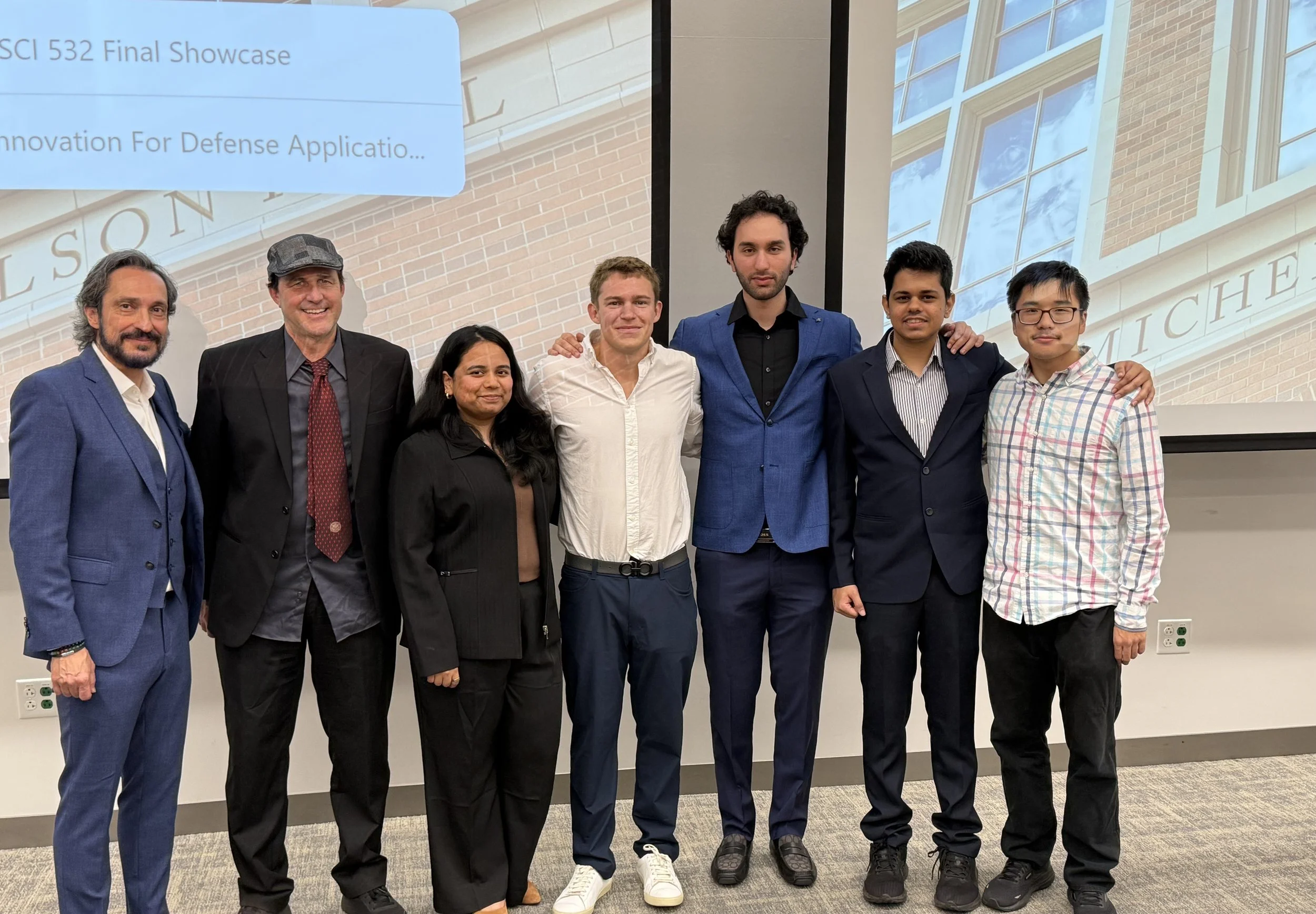
The Team
Matthew Daxner
Matthew is from Toronto, Canada. He recently completed his M.S. in computer science at USC, where he researched ways to help small language models solve programming problems more effectively. He earned a B.S. at UC Santa Cruz taking on the roles of a tutor and course grader while competing on the school's NCAA men’s swim team. His background combines solid technical research with teaching experience, team leadership and discipline, preparing him to tackle real-world software challenges.

Nathan Kong
Nathan completed his undergraduate degree at UC Riverside as a computer engineering major. He was also enrolled in University Honors, where he researched and published a paper in the GeoSciences Journal relating to climate change. Nathan completed his master’s degree in computer science at USC in May 2025 and has been an intern at Leidos for 3 years now.
Michael Kurdahi
Michael is a California-born software engineer who pairs human centered design with machine learning. He earned his B.S. in informatics from UC Irvine, specializing in human computer interaction and leading an AR/VR pediatric care capstone project for Children’s Hospital Orange County (CHOC) Autism Center, and is now pursuing an M.S. in computer science at USC focused on applied machine learning and full stack systems. In industry roles at Identity Digital and other companies he modernized high traffic web platforms and built large scale cybersecurity data pipelines that turn complex data into actionable insight. He now channels UX intuition and scalable engineering into intuitive, high impact software while developing AI models for healthcare and defense.
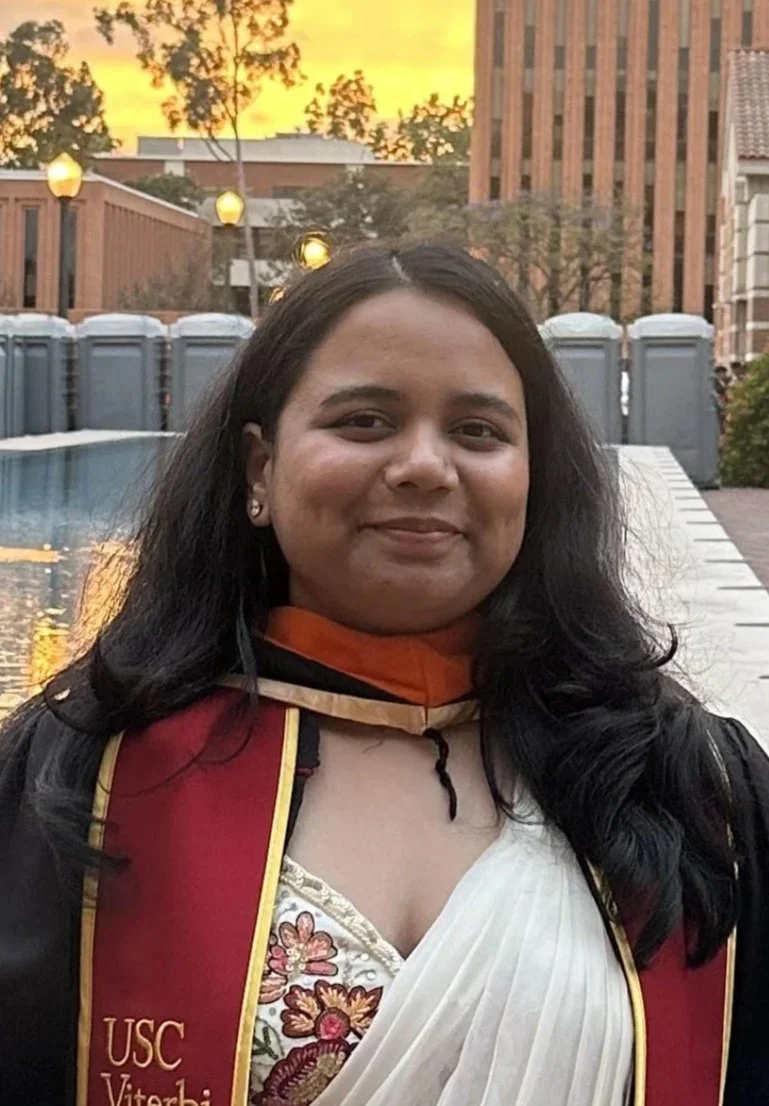
Aayushi Goenka
Aayushi is an MS Computer Science graduate from USC, drawn to the core of data and AI infrastructure and guided by her belief that strong systems are the foundation of any meaningful venture. She’s interested in building the underlying structures that enable the integration and practical use of high-performance AI models in real-world applications. Aayushi has explored setting up AI infrastructure across the music, defense, and legal industries, where she has learned to adapt across domains, broaden her scope, and customize AI systems to fit distinct operational constraints. These experiences have shaped her ability to implement AI in diverse, real-world environments, reinforcing her focus on building reliable, well-structured systems for impactful applications.
Overview
Fort Campbell - U.S. Army
Problem Sponsor
Electronic warfare soldiers who are trying to spoof adversaries with decoy Wi-Fi or FM traffic, struggle to deter adversaries due to unrealistic spoofing tools.
95+
Original Problem Statement
Number of Interviews
The Problem
During the Spring 2025 Hacking for Defense (H4D) course at the University of Southern California, Vyura Tech addressed a critical challenge in modern combat: equipping U.S. military electronic warfare (EW) soldiers with better tools to deceive adversaries and protect troops. Currently, when these soldiers attempt to spoof enemies with decoy Wi-Fi or FM signals, they’re relying on makeshift, DIY systems or even throwing radios into the field to mislead opponents.
“Our sponsor from the 101st Airborne Division told us they didn’t have scalable, low-cost tools for decoy signal emissions,” said Michael Kurdahi.
As the team quickly discovered, current systems like the General Dynamics Mimic 2 exist, but they cost around $100,000 per unit and aren’t scalable or expendable. EW operators needed solutions that are cost-effective and intentionally designed for high-risk environments where systems may be expendable but must still deliver mission impact.
The Innovation
Vyura Tech set out to solve this problem by designing a low-cost, modular network of mini-computers that emit radio frequency (RF) signals mimicking soldier communications. Their innovation? A “networked deception system” that creates convincing radio chatter among nodes, imitating an entire company of troops, even when no one is there.
“Our MVP is basically a small network of RF-emitting devices that simulate conversations between soldiers,” explained Matthew Daxner. “We’re talking about mini-computers sending out signals to one another based on an action plan that includes roles like riflemen or medics. It’s like spoofing a real unit’s behavior through signal traffic.”
This approach came after more than 95 interviews with electronic warfare operators, DoW stakeholders, and defense experts. The team narrowed a wide problem space down to a specific need, RF-based deception, and validated it repeatedly with feedback from their sponsor in Germany and operators around the world.
They even demoed their early prototype to soldiers from the U.S., Australia, and New Zealand, who were pulled into an impromptu feedback session during one interview. “It was one of the best interviews we had,” Michael said. “We had five people from three different countries giving us insights in real-time.”
Their MVP was designed from the ground up to reflect a clear insight from stakeholder interviews. It needed to be low-cost and intentionally expendable. “That’s what we heard from nearly every interview,” Michael said. “It needs to be affordable, scalable, and expendable because the whole point is to attract enemy fire away from real troops.”
Presentation
Vyura Tech’s Hacking for Defense Experience
For the team, Hacking for Defense wasn’t just a class; it was the launchpad.
Michael admitted he signed up because of the course’s teaching team, but he quickly realized it would be the most impactful experience of his graduate program. “It’s the only class I’ll remember,” he said. “It taught me how to validate ideas… and how to talk to the right people.” Matthew had known about the class for over a year and jumped at the opportunity to learn from a top cybersecurity professor and a seasoned entrepreneur. “This wasn’t just another grad class. It was real work, every week, solving a real-world problem.”
The H4D methodology, hypothesis-driven development, customer discovery, and constant iteration shaped their entire mindset. “We were CS students,” Matthew explained. “We didn’t learn this stuff in traditional courses. But this class pushed us outside our comfort zone and gave us the social and business skills we’ll use forever.” Even the composition of the team was serendipitous. “We just kind of looked at each other on the first day and said, ‘You want to team up?’” Michael recalled. “Everything just clicked.”
What’s Next
Now in the Defense Innovation Unit-supported Summer Fellowship, Vyura Tech is pushing their MVP further. They have three major goals: a working prototype by the end of the summer ready for field testing; identifying a customer ready to purchase their product, including the Secret Service and Navy SEALs; and securing funding pathways such as SBIR grants, venture capital, and defense tech accelerators to determine the right route forward.
“We’re figuring out the best path, venture capital, Small Business Innovation Research (SBIR), or another accelerator,” said Michael. “We’re not just building a device, but laying the foundation for something much bigger.”
Their long-term vision? To become the leading platform for electronic deception technology, starting with RF spoofing and eventually expanding to AI-driven, adaptive electromagnetic dominance a vision they call “Deception-as-a-Service.”
“We're in a moment of transition,” said Michael. “The last 20 years of warfare were about insurgencies. Now it's a state-on-state conflict, and the needs are changing. We're building the tech for that future.”