
Parallax Defense
Parallax Defense
University of California, Berkeley
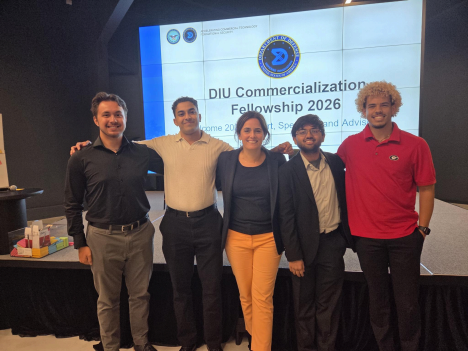
The Team

Yelda Bartlett
Yelda is CEO and Co-Founder of Parallax Defense Corp., building counter-drone systems for defense and public safety end users. Before Parallax, she founded and managed her own law firm. She holds a JD from UC Law San Francisco and an MPA from UC Berkeley's Goldman School of Public Policy, and brings a legal and policy background to national security technology, acquisition, and regulation. Yelda leads company strategy, operations, government engagement, fundraising, and regulatory and export-control matters. She is a DIU Commercialization Fellow. Her focus is translating operator requirements into capability that can actually be fielded, procured, and authorized for use.

Daeva Indrakumar
Daeva is currently a Mechanical and Aerospace Engineering student at the University of Georgia, where he has conducted CFD research on subsonic drones through the UGA CURO program and has served as Chief Engineer on two CubeSat missions for the UGA Small Satellite Research Lab. He is currently the Technical Lead at Parallax Defense Corp, where he leads development of the cUAS system, directing work across CFD simulation, sensor fusion and tracking architecture, and computer vision.
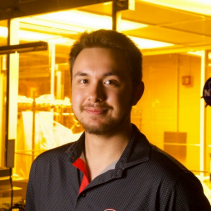
Justin Parry
Justin leads electrical hardware subsystems for cUAS system Parallax is building. He previously served as an Engineering Intern at Textron, a Hardware Engineer at UGA's CREATE Lab, and Chief Engineer for the LEARNSat CubeSat mission at UGA. He is pursuing a B.S. in Electrical and Electronics Engineering with a Certificate in Aerospace Engineering at the University of Georgia, expected December 2027.

Aarav Kumar
Aarav leads Business Operations at Parallax, directing program operations, procurement, test logistics, vendor relationships, and leading legal affairs and fundraising by cultivating institutional and investor partnerships. He previously consulted for the Naval Surface Warfare Center (NSWC) Crane Division on product evaluation for commercial profitability, and serves as a Research Assistant at the Institute for Corporate Governance + Ethics, studying white-collar crime and federal clemency. He is a National Security Language Initiative for Youth (NSLIY) Scholar through the U.S. Department of State, and is studying Finance and Business Analytics at the Kelley School of Business, Indiana University.
Overview
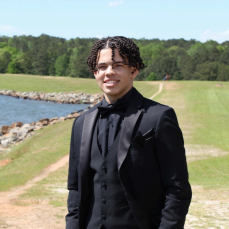
Benjamin Parker
Benjamin is a 4th year Computer Science and Mathematics double major at the University of Georgia. He has experience in Cryptography, Low Level System Engineering, Algorithm Development and building AI models and training. He is currently involved in two research labs: SpectraGuru and Small Satellite Research Lab.
175TH MULTI-ROLE BRIDGE COMPANY (MRBC) // U.S. Army 637th
Problem Sponsor
Combat units operating in contested environments cannot neutralize small enemy drones carrying explosives at the tactical level, forcing them to adopt restrictive protective measures that slow maneuver, extend exposure time, and increase risk to personnel and critical assets.
100+
Original Problem Statement
Number of Interviews
The Problem
Parallax Defense participated in Hacking for Defense (H4D) at UC Berkeley in 2026 and continued their work through the Defense Commercialization Fellowship the following summer. They partnered with the 175th Multi-Role Bridge Company in the U.S. Army's 1st Infantry Division, which faced a critical operational gap: despite conducting some of the Army's most vulnerable river-crossing operations, the unit had no way to detect or neutralize small drones. As unmanned aerial systems have become an increasingly common battlefield threat, the team was tasked with developing a solution that could protect soldiers operating in highly exposed environments.
The Discovery Process
The team conducted more than 100 discovery interviews with military operators, commanders, retired military leaders, firefighters, law enforcement personnel, counter-UAS experts, and soldiers deployed in Ukraine. Through referrals from their partner organization and cold outreach, they sought to understand not only the technical challenge but also the day-to-day operational realities surrounding counter-drone defense.
Those conversations reshaped the team's understanding of the problem. While rifles appeared to offer one existing solution, operators consistently explained that they were reluctant to use them because of the risk of collateral damage. As Yelda Bartlett explained, "Theoretically it sounds like, okay, well it would work, but if there's reluctance to use it, then pragmatically it doesn't work."
The team also learned that bridge companies often receive lower priority for force protection, creating a need for an inexpensive, autonomous system that could reduce operator workload. These insights shifted the team's focus from simply stopping drones to providing continuous protection without requiring additional personnel or distracting soldiers from their primary mission.
The Innovation
The interviews revealed something simple but important: bridge units always have access to water. That insight sparked the team's first major idea, using high-pressure water to disable drones. With help from the Fort Riley Fire Department, they tested the concept and proved that pressurized water could knock drones out of the sky.
However, the tests also revealed that manually aiming and firing the system would be too difficult during real engagements. As Daeva Indrakumar explained, the team "figured out that it is hard to control the system by hand," which pushed them to add a software component and move toward a more autonomous solution.
The team pivoted toward a "detect, track, engage, assess" system, an AI-driven platform designed to identify drones, track them, and neutralize them with minimal human involvement. As the project progressed beyond the course, the team expanded its efforts. They incorporated a company, recruited specialized engineering teams and interns, and continued developing the system through UC Berkeley's SkyDeck incubator.
Presentation
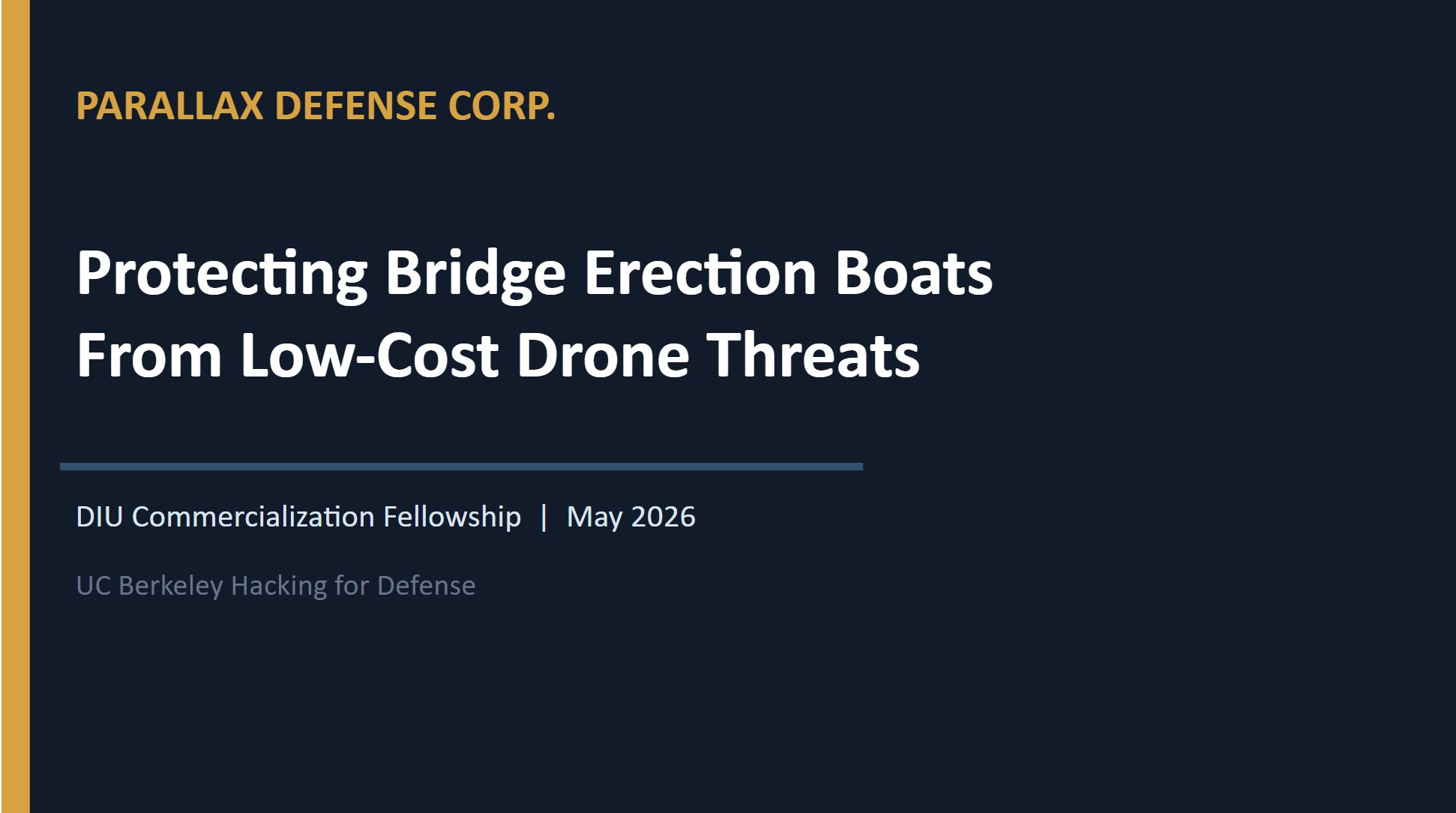
Parallax Defense’s H4D Experience
Yelda Bartlett, a practicing lawyer who returned to UC Berkeley to study public affairs with a focus on national security and technology, reflected on her time in H4D. The course gave her an opportunity to work directly with military operators on a real national security challenge.
For Yelda, one of the most impactful parts of the course was the discovery process and the opportunity to continuously test assumptions through conversations with stakeholders. "There's just no comparison to the kind of firsthand information that you get," she explained. "It's so rich with emotion and feeling."
Those interviews provided a level of operational insight that could not be replicated through research alone, ultimately shaping both the team's understanding of the problem and the evolution of their solution.
What’s Next
Parallax Defense continues to develop its solution today. The team has built a multidisciplinary organization and is refining a low-cost, autonomous counter-UAS platform designed specifically for units operating in dangerous, exposed environments. Their mission remains the same: providing soldiers with protection they can trust without adding to their workload.