
ENCOMPASS
ENCOMPASS
University of California, San Diego
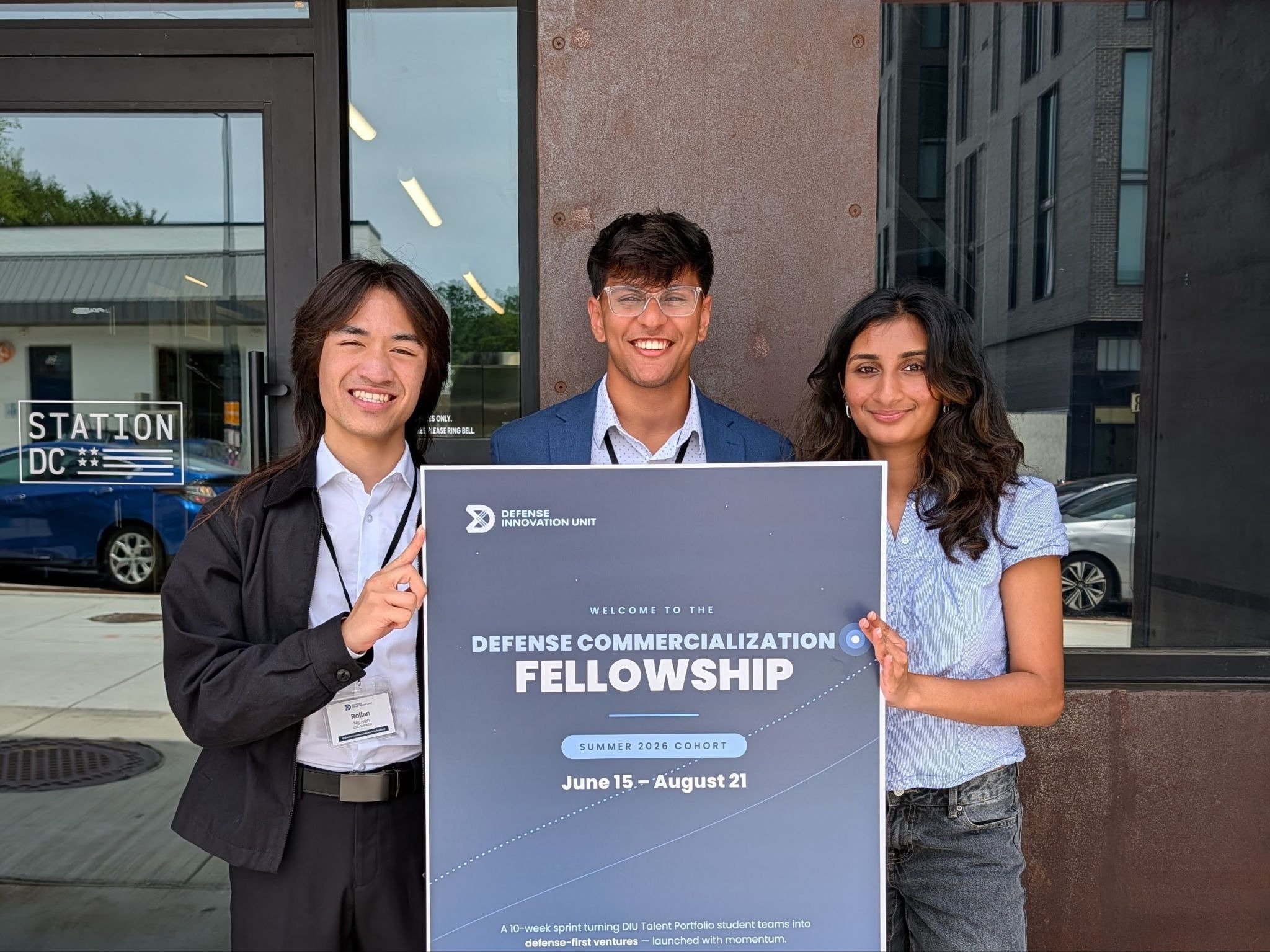
The Team

Chimnay Sule
Chimnay a second-year at UC San Diego studying Mathematics and Economics. He has an interest in database curation and work to make sure our platform has all the data it needs. At Encompass Labs, he has taken on developing the company and finding new avenues in which Encompass Labs can flourish.

Sanjana Sarathi
Sanjana is a fourth-year at UC San Diego studying Cognitive Science with a specialization in Machine Learning. She is interested in artificial intelligence, product development, and designing intuitive user experiences. At Encompass Labs, she helps shape the product by designing workflows and interfaces that make research discovery more accessible and efficient for users.

Rollan Nguyen
Rollan is studying Machine Learning & Neural Computation at UC San Diego, with a particular interest in developing responsible and equitable decision making systems. At Encompass Labs, he focuses on building their platform end to end, drawing on his background in machine learning and software development to ensure that users can trust the calculations, research, and results the platform surfaces.
NIWC Pacific
Problem Sponsor
Research institutions are struggling with identifying technologies capable of solving defense challenges
80+.
Original Problem Statement
Number of Interviews
The Problem
When Team Encompass joined Hacking for Defense at the University of California, San Diego, they partnered with the Naval Information Warfare Center (NIWC) Pacific to solve a challenge that often goes unnoticed but has a major impact on innovation.
Science advisors at NIWC are responsible for identifying academic research that could help solve real operational challenges for the Navy. However, finding that research was an incredibly manual process. Advisors often spent hours searching through university websites, research repositories, and thousands of academic papers just to locate work that might be relevant. With searches regularly returning tens of thousands of papers, valuable research was often difficult to find, slowing down the discovery of new technologies that could support the mission.
Although none of the team members had prior experience working with the Department of War, they quickly recognized the opportunity to create a solution that could make research discovery faster, smarter, and far more efficient.
The Innovation
The team's original idea was to build a large repository that gathered research papers into one place. However, after conducting extensive customer discovery, they learned that the real problem wasn't the lack of research databases but the overwhelming amount of information already available.
This realization led to a major pivot. Instead of creating another database, the team developed Encompass, an intelligent research navigation platform designed to help science advisors quickly identify the most relevant research for a specific operational need. Rather than simply displaying thousands of search results, Encompass ranks and organizes information so users can easily compare papers, save research into workspaces, and collaborate more effectively.
The team continuously refined the platform based on feedback from users, conducting more than 80 stakeholder interviews with researchers, defense personnel, and potential customers. They also visited NIWC Pacific to observe existing workflows firsthand, allowing them to better understand how their solution could fit into day-to-day operations.
One of the team's proudest milestones came while improving Encompass's search engine. After integrating a more advanced AI model, they reduced search times from several minutes to approximately 20 seconds, turning what had once been a slow prototype into a tool that felt practical and ready for real-world use.
ENCOMPASS’s H4D Experience
For each team member, Hacking for Defense became much more than a class.
The course challenged them to constantly question their assumptions and let customer discovery guide every design decision. Instead of becoming attached to their first idea, they learned to validate every feature with real users and remain flexible enough to pivot when necessary.
The experience also reinforced the importance of collaboration. Each member brought different strengths, from product strategy and user experience design to software development. Those complementary skills allowed the team to move quickly while building a product grounded in real customer needs.
Most importantly, the team discovered that successful innovation isn't about building technology first. It's about deeply understanding the people you're building for.
What’s Next
Following the course, Team Encompass continued developing its platform through the Defense Commercialization Fellowship (DCF). Their focus has shifted from building a prototype to creating a fully functional product that organizations can begin using in real-world environments.
Today, the team is expanding Encompass's capabilities while continuing customer discovery to identify pilot opportunities with government organizations. Their long-term goal is to integrate the platform into science advisor workflows, helping connect groundbreaking academic research with the operational challenges that need it most.
Looking back, the team credits their success to three key lessons: invest heavily in customer discovery, never be afraid to pivot when the evidence points in a new direction, and build a team whose members complement one another's strengths. Those principles continue to shape Encompass as it grows beyond the classroom and toward real-world impact.