
OVERSEER
OVERSEER
University of Florida
The Team
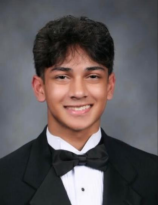
Ethan Ahmed
Ethan is a Computer Science major at the University of Florida specializing in software engineering, backend systems, and applied AI. With core strengths in Python, data pipelines, and intelligent automation, his technical background spans developing competition-grade systems as a FIRST Robotics programmer to teaching computational thinking as a Code Ninjas instructor. Recognized as a 2nd Place Winner at the OSC Hackathon for a computer-vision solution and a GatorHacks Finalist for his AI-powered emissions platform CarbonIQ, Ethan is driven by a commitment to building technically rigorous, impactful software that solves complex real-world challenges.

Shayan Ahmed
Shayan is a Computer Science graduate student at the University of Florida specializing in Data Science and Machine Learning. With professional software engineering experience at Masters India and Comviva Technologies, he brings a strong foundation in scalable data systems, Django APIs, database optimization, and backend deployments for fintech and digital banking platforms. His applied expertise combines machine learning, data preprocessing, and natural language processing to model complex human behaviors and social dynamics—demonstrated by projects like an urban mobility pipeline analyzing transit and census data to measure social equity. Grounded in coursework spanning AI Ethics, statistical analysis, and NLP, Shayan leverages engineering depth and strategic thinking to transform raw data into actionable, high-impact insights.
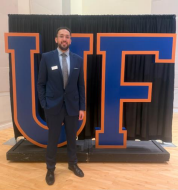
Gabriel Ayoubi
Gabriel Ayoubi holds a B.S. in Computer Science and is pursuing a Master’s in Mechanical Engineering at the University of Florida, focusing on machine learning applied to the control and automation of dynamical systems. His interdisciplinary research background includes constructing data pipelines at the UF Data Studio and developing soft-material classification pipelines in the SNAP Lab. Complementing his research, Gabriel builds autonomous vehicle systems for the Gator Autonomous Racing Club, serves as a Teaching Assistant for Operating Systems, and acts as a peer mentor at the UF Collegiate Veterans Success Center. Driven by a systems-level engineering approach, he excels at creating dependable, high-stakes software and machine learning solutions for complex, real-world operational challenges.
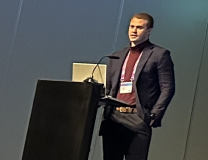
Michael Bender
Michael Bender is an Electrical and Computer Engineering PhD candidate at the University of Florida and PMP-certified project manager with a B.S. in Biological Engineering from the University of Missouri. Bridging industrial project management and translational neuroengineering, he previously directed $300M+ energy infrastructure projects at Precision Pipeline, LLC and built enterprise PowerBI analytics systems. Currently, Michael serves as the lead researcher on a multi-million-dollar NIH UH3 study developing adaptive, closed-loop deep brain stimulation (DBS) for Essential Tremor, leveraging signal processing, machine learning, and spiking neural networks to optimize real-time neuromodulation. Honored with the SEC Engineering Deans Graduate Fellowship and a top 7% paper selection at IEEE EMBC, he excels at integrating complex data analytics, engineering oversight, and biomedical innovation.
Overview
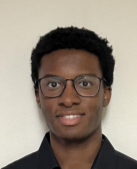
Benjamin Parker
Jaden is a Data Science major at the University of Florida focusing on statistical and machine learning methodologies to design informed solutions for complex problems. Proficient in Python, C++, and R, he combines strong software engineering capabilities with extensive expertise in the AWS cloud ecosystem to build fast, scalable data pipelines and IoT systems. His practical experience ranges from using statistical learning to predict chemical neurotoxicity from RNA sequencing data to developing EcoTradeBin, a computer-vision-powered waste sorting device featuring real-time cloud telemetry. Grounded in coursework across natural language processing, computer vision, and numerical analysis, Jaden is driven by the practical deployment and theoretical frontiers of real-world AI and Big Data systems.
J39 // Special Operations Command (SOCOM)
Problem Sponsor
Operational Planners for the J39 need a way to automate data collection and analysis of the information environment to rapidly assess, understand, and make decisions regarding the cognitive/human domain.
53
Original Problem Statement
Number of Interviews
The Problem
During the Hacking for Defense (H4D) course at the University of Florida, Team OVERSEER addressed a critical challenge in modern special operations: enabling the SOCOM J39 unit in Tampa to effectively analyze information operations data. Composing a multidisciplinary cohort spanning from freshmen to PhD candidates, students Michael Bender, Jaden Despeines, Ethan Ahmed, Shayan Ahmed, and Gabriel Ayoubi entered a complex problem space. Their sponsor's initial prompt was broad; they wanted to automate data collection and leverage artificial intelligence for analysis.
However, as the team quickly discovered while conducting 53 beneficiary discovery interviews throughout the semester, the real roadblock wasn't a lack of tools, it was fragmented systems, disconnected data, and the absence of a clear operational use case for AI.
“It became abundantly clear within the first five interviews what the true problem was,” Michael Bender noted. He explained the initial disconnect surrounding AI adoption, stating, “While they had measures of performance, what was really needed is measures of effectiveness. They wanted to see if AI could bridge this gap”
Instead of measuring true strategic impact, the unit was relying on basic measures of performance, such as social media engagements, rather than understanding how campaigns actually influenced population viewpoints. Furthermore, while existing commercial sentiment analysis tools were available to the unit, they left a critical analytical gap. “These tools just show correlation,” The Team explained. “They don't show causation here.”
The Innovation
To solve this problem, Team OVERSEER pivoted away from standard sentiment analysis and designed a new methodology centered on causal inference. They developed a comprehensive literature review and a causal inference model that combined with human population simulation takes the unit beyond simple correlation. The framework not only proves the actual causal impact of past information campaigns, but also delivers predictive analytics to forecast how populations will respond to future narratives.
This breakthrough came after extensive field validation and engagement, including a two-day site visit to SOFWERX. There, the team engaged directly with stakeholders across CDAO, SOF AT&L (Acquisitions, Technology, & Logistics), Joint Web Ops, and cybersecurity teams. These interactions allowed them to navigate critical technical and regulatory barriers, such as the military's Risk Management Framework and the Authority to Operate (ATO) and Authority to Connect (ATC) processes.
Their rigorous approach delivered immediate, tangible impact. The team earned an official legal letter of appreciation from the acting director of J39, commending their dedication and the viability of their model. Even more impressively, the unit submitted the team's problem statement to the small business office as a Small Business Innovation Research (SBIR) proposal to fund and formalize their solution.
Team OVERSEER’s H4D Experience
For the students, Hacking for Defense wasn't just another university course; it was an immersive launchpad into the world of defense technology and entrepreneurship.
Jaden was drawn to the class by a desire for practical, cross-functional collaboration. “I found that I really loved the experience-based courses where I got to have one large project that I worked on through months with a team where we each got to specialize in different things,” he shared. Ethan emphasized how unique the environment was compared to traditional academia: “It's basically just so much different than any other university course because it's hands-on. You're working on a real project helping real people”.
The course's methodology, rooting problem-solving in the Lean Startup approach, shaped their entire mindset. Instead of prematurely building a product, they learned the discipline of hypothesis-driven development and continuous iteration. Shayan reflected on all the skills he was able to develop throughout the course, noting that the course pushed him to “think out of the box, not coming directly to the solution and iterating through the problem “.
Beyond technical execution, the course pushed them out of their comfort zones, teaching them how to distill complex engineering concepts for non-technical audiences and how to navigate extreme organizational fragmentation to connect disparate defense stakeholders.
What’s Next
Team OVERSEER isn't slowing down. Following the conclusion of the semester, their primary focus has shifted toward commercialization and preparing for the upcoming SBIR program application cycle. Backed by a University of Florida Tech License, OVERSEER is ready to hit the ground running and take their startup journey to the next level.
They are currently finalizing cage codes, registering with necessary government systems, and have identified a Principal Investigator (PI) to meet the 51% requirement as they target a Phase 1 SBIR award. Alongside these commercialization efforts, team members continue to advance their defense innovation journey through participation in the DCF fellowship.
Ultimately, the course has left a lasting impact on their career trajectories, opening their eyes to opportunities in entrepreneurship and industry roles rather than traditional academic paths. They walk away with the confidence to communicate complex technical solutions and the real-world experience needed to solve large-scale national security challenges.