
Rare Earth Rescue
Rare Earth Rescue
University of Chicago
The Team

Katie Taylor
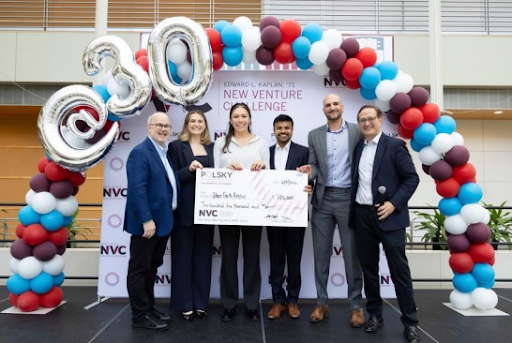
Katie Taylor is a 2026 MBA graduate of the University of Chicago Booth School of Business and a Defense Innovation Unit (DIU) Commercialization Fellow. She is a co-founder of Rare Earth Rescue, a marketplace for recycled rare earth magnet feedstock that strengthens U.S. supply chain resilience. Prior to Booth, she spent five years in defense consulting at Deloitte and Booz Allen Hamilton, and developed Rare Earth Rescue through Hacking for Defense and Booth's New Venture Challenge, where it won the People's Choice Award and the Polsky Energy Transition Leadership Award.

Shivam Jindal
Shivam Jindal is a Chicago Booth MBA graduate with a bachelor’s degree in Industrial Engineering from BITS Pilani, India. Previously at P&G, he led manufacturing capital investments and complex supply chain operations before transitioning into entrepreneurship. As co-founder of Rare Earth Rescue, he brings deep expertise in operations, finance, and business strategy.
DLA Strategic Materials
Problem Sponsor
DLA Strategic Materials needs a reliable domestic supply of defense-grade neodymium-praseodymium (NdPr) magnets free from Chinese dependence, in order to ensure uninterrupted access to critical materials for U.S. military production and reduce geopolitical risk.
Original Problem Statement
250+
Number of Interviews
The Problem
Team Rare Earth Rescue participated in Hacking for Defense (H4D) at the University of Chicago Booth School of Business before continuing their work through the Defense Innovation Unit (DIU) Fellowship. Katie Taylor brought the challenge to H4D after previously working as a Department of War consultant focused on supply chain risk management for rare earth elements.
The team focused on a growing vulnerability in the U.S. rare earth supply chain. China dominates much of the global rare earth supply chain, while only a small share of these materials are recycled. With new sourcing restrictions increasing pressure on defense contractors to reduce reliance on Chinese rare earth materials, Rare Earth Rescue set out to explore how recycling could help strengthen domestic supply.
The Innovation
Katie initially entered H4D with the hypothesis that strengthening the domestic rare earth supply chain would require building more recycling facilities in the United States. But after completing roughly 75 discovery interviews during H4D, the team uncovered a different bottleneck: existing recyclers were not limited by processing capacity, but by their ability to source enough rare earth-bearing scrap to scale.
That insight shifted the team’s focus from building new recycling infrastructure to helping existing recyclers access more supply. Katie later partnered with Shivam Jindal, who brought a background in logistics and supply chains, to further develop the concept into a digital marketplace.
Together, they developed Rare Earth Rescue, a virtual marketplace designed to connect owners of rare earth-bearing scrap, including data centers and scrapyards, with recyclers. The platform aims to aggregate fragmented supply, improve price transparency, and help scrap owners better understand the value of rare earth materials contained in end-of-life products.Through the DIU Commercialization Fellowship, the team had completed roughly 200 interviews in total, using continued stakeholder engagement to refine both the marketplace model and its role within the broader rare earth supply chain.
Presentation

Rare Earth Rescue’s H4D Experience
For Katie, one of the most valuable parts of H4D was being pushed to challenge assumptions she had developed through her previous work in the rare earth industry. Because she entered the course with relevant experience, she initially viewed much of what she knew as established ground truth. The discovery process forced her to revisit those assumptions and recognize how much the problem space had evolved.
Katie also valued having a low-risk environment to test ideas, make mistakes, and continuously iterate based on stakeholder feedback. That process ultimately helped the team move beyond simply finding a solution and instead focus on identifying the right solution for the problem they had uncovered.
What’s Next
After completing H4D, Rare Earth Rescue continued its development through the University of Chicago’s New Venture Challenge, where the team raised initial funding to support the business. The team then carried that momentum into the DIU Fellowship, using the program to deepen its connections across the defense ecosystem, identify potential supply-side partners, and expand the technical support needed to build out the platform.
Today, Katie and Shivam are working full-time on Rare Earth Rescue and continuing to develop the marketplace. The team is building relationships across both defense and commercial supply chains while preparing to complete its first marketplace transactions.